Featured

Euro-Wabanaki Wars: Maine in 1675
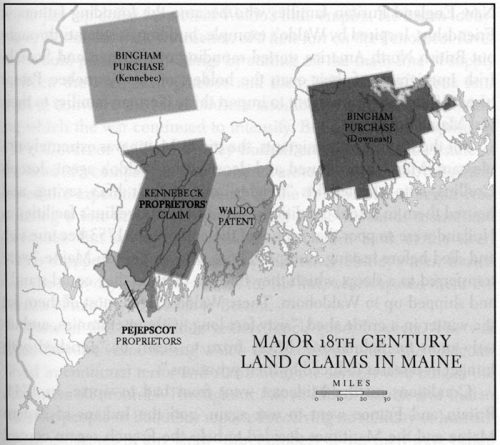
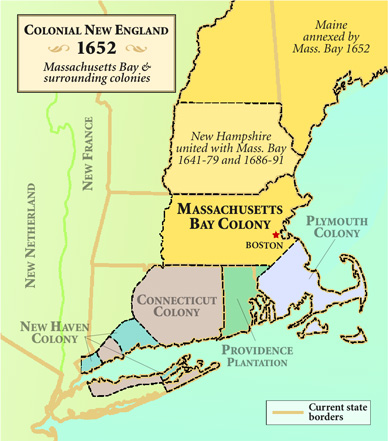
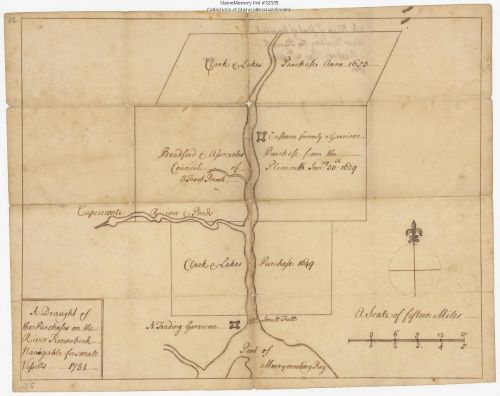
In 1675, the English occupation of Maine was limited to a narrow coastal band, extending from the Piscataway to Penobscot Rivers, and along the riverine valleys. The English clung to what early historian William Hubbard called the “sea border” and considered the unfamiliar woods behind them “a great Chaos, the lair of wild beasts and wilder men” (Maine History Online, 2010).

The most significant concentrations of English settlers were located at Cape Porpoise and Saco, Falmouth, the Pemaquid Peninsula, and along the Kennebec and Penobscot Rivers. The English population in Maine consisted of approximately 3,500 hardy souls in 1675, while the rest of New England, mostly Massachusetts, contained around 50,000.  

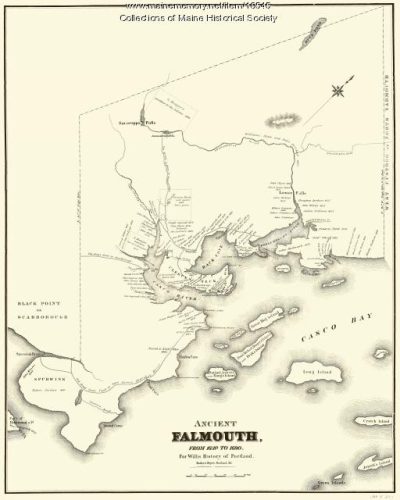
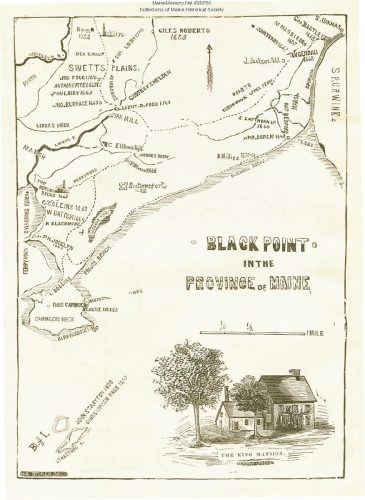
As Siebert (1983, p.) describes Maine in 1675: “The largest and most important white community was Black Point, which included Prout’s Neck and Scarborough and extended from the Spurwink River west to the Nonesuch River. It counted more than 50 houses and had a population of about 650 people with a militia of 100 men. The Abenakis recognized Black Point as the strongest fortification in Maine and the most difficult to reduce since it had at least four strong garrison houses, those of William Sheldon, Joshua Scottow, Richard Foxwell, and Henry Jocelyn (Josselyn).  Next in size was Casco Bay or Falmouth, which included the scattered habitations along the Fore River, on Munjoy Hill, and about the Back Cove and Presumpscot River, with a total of about 40 houses and 400 people. There were about ten other settlements from Kittery to Pemaquid.

As English society grew in the seventeenth century, hamlets evolved into towns, and forests and open lands increasingly gave way to the axe and the plow. This increased contact with the Wabanaki led to conflict. “The proliferation of fur traders and settlers profoundly disturbed the Abenaki way of life” (Baker, 1985, p. 13). As increasing numbers of fishermen moved into the Riverine valleys, they pushed the Wabanaki further back into the backcountry, away from their traditional coastal fishing grounds that they had relied on seasonally for food. This made them more dependent upon hunting game for food and obtaining English food supplies. The arrival of European fur traders also tied the Indians even more strongly to hunting. By 1675, the Wabanaki people had come to depend on English guns and ammunition for survival, abandoning their traditional methods of huntingThe stage was now well set for the coming wars.

The economy

The economy of Anglo-Maine was centered around agriculture, fishing, and lumbering. The prominent settler at Black Point, John Josselyn, remarked (Churchill, 2011, p. 66);  “All these towns have stores of salt and fresh marsh [hay] with arable land. They are well-stocked with cattle.   Josselyn also found Saco and Winter Harbor “well stored with cattle, arable land, and marshes.” William Hubbard indicated that “upon the banks [of the Sheepscot] were many scattered planters … a thousand head of neat cattle … besides … Fields and Barns full of Corn.” Further east lay Pemaquid, “well accommodated with Pastureland about the Haven [harbor]   for feeding Cattle and some Fields also for tillage.” Fishing was also much in evidence.  However, there were some regional differences in economic emphasis. Wells, Saco, Falmouth, and Sheepscot were focused on farming, while Cape Porpoise, Winter Harbor, Richmond Island, Damariscove, and Monhegan were concentrated on fishing.

The lumber trade also substantially impacted most of the European settled coast. As Churchill (2011, p. 67) describes, “… nearly every community had at least one sawmill, and a number had several…” The first mill was built by John Mason in 1634 on the Little Newchawnnock River (near Berwick). Although short-lived, it was followed by at least six other mills between 1648 and 1660. By the mid-1670s, York supported at least ten mills, while Wells and Saco each had three. Further east, the Clark and Lake swills in the Sagadahoc area readied a hundred thousand feet of boards for shipment in 1675. The Piscataqua area also provided numerous white pine masts and spars, many of which were being shipped directly to England” (Churchill, 2011, p. 67).

As the towns matured, they acquired many artisans, including blacksmiths, carpenters, millwrights, coopers, shoemakers, and tailors.

The French

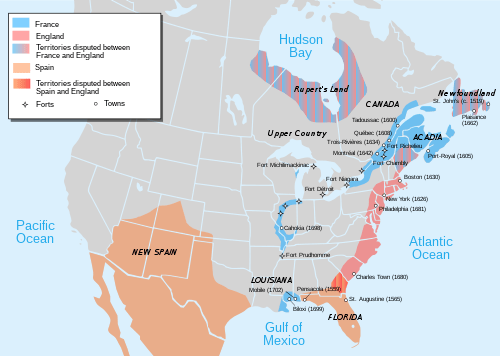
The French were in much smaller numbers than the English in Maine, located at trading outposts of varying duration at Pentagoet atthe mouth of the Penobscot River, St. Sauveur on Desert Island, Magies on the Machias River, and Port Royal in Nova Scotia. By far, the greatest concentration of Frenchmen was more south in the St. Lawrence Valley and Quebec, where about 10,000 lived.

Overall, the Wabanaki felt much friendlier toward the French than the English, as they did not view the French as harboring the same expansionistic designs as the English. The French were almost entirely focused on the fur trade, and the Wabanaki would form strong alliances with them for that purpose. The French learned to speak fluent Algonquian and worked diligently to establish trading relationships based on mutual respect.

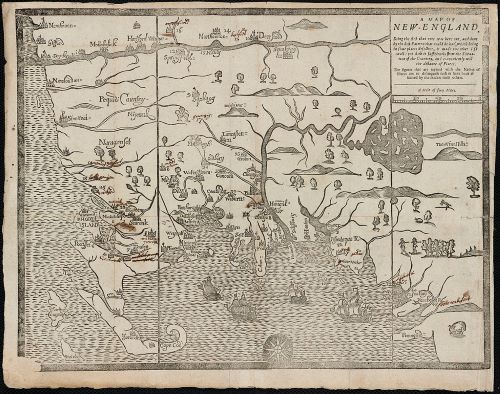
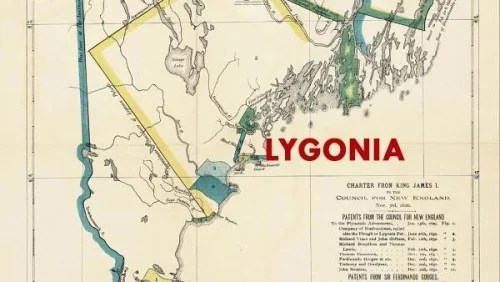
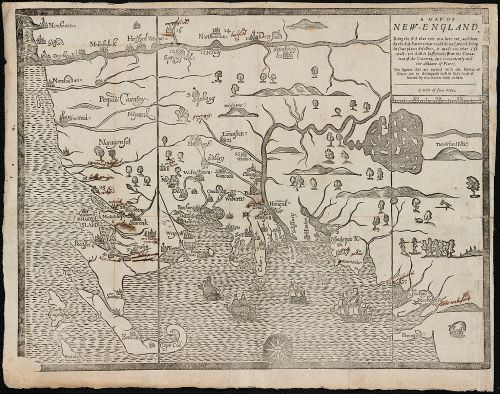
Illustration:

William Hubbard’s first map of New England (1667). From his “A Narrative of the Troubles with Indians in New England, from the Planting Thereof to the Present Time.” Originally published in Boston.

Bibliography:

Baker, E. W. (1986) Trouble to the eastward: the failure of Anglo-Indian relations in early Maine. Dissertations, Theses, and Masters Projects. William & Mary. Paper 1539623765. https://dx.doi.org/doi:10.21220/s2-mh0r-hx28

Churchill, E. (2011). English beachheads in seventeenth-century Maine.  In: Judd, R.W., Churchill, E.A., and Eastman, J.W. (Eds.). Maine: The Pinetree State from Prehistory to the Present. University of Maine Press, Bangor. pp. 51–75.

Maine History Online (2010). 1668-1774, Settlement and Strife. Maine History Network. The Maine Historical Society, Portland.  https://www.mainememory.net/sitebuilder/site/897/page/1308/print

Siebert, F. T. (1983). The First Maine Indian War: Incident at Machias. Algonquian Papers – Archive14.  https://ojs.library.carleton.ca/index.php/ALGQP/article/view/837

Early Contact Period (3): Champlain’s second voyage to Maine

On the eighteenth of June, 1605, Samuel de Champlain and the Sieur de Monts set out from Ste. Croix Island, accompanied by nineteen sailors, and two Indigenous guides – Panounias, an eastern Wabanaki that spoke the language of northern Maine, and his wife, unnamed, a western Wabanaki who spoke the language of the south.

The group traveled down the coast of Maine, sailed past Mount Desert Island, and coasted into the Kennebec River. After traveling for some distance, they were met by two canoes of Wabanaki hunting birds. As Champlain describes: “ We accosted these Indians through our own, who went towards them with his wife, and she explained to them the reason for our coming. We made friends with them and with the Indians of that river who acted as our guides.” (Biggar, 1922: 315)

Coasting along Westport Island, they landed at Wiscasset, where the Wabanaki chief  Manthoumermer awaited them with twenty-five or thirty others. Champlain writes: “Drawing near our pinnace he made us a speech, in which he expressed his pleasure at seeing us, and said he desired an alliance with us, and through our mediation to make peace with their enemies. He added that the next day he would send word to two other Indian chiefs who were up country, one called Marchin, and the other Sasinou, chief of the Kennebec River.” (Biggar, 1922: 316)

The next day they were guided to Merrymeeting Bay, where the Kennebec and Androscoggin Rivers meet. They waited here for a day for Marchin and Sasinou, who did not show. They were then led back down the main Kennebec River to its mouth, where they caught “a great number of fine fish” (Biggar, 1922:320). Their guides subsequently went off hunting and did not return.

The Sieur de Monts and Champlain then sailed into Casco Bay and spent the night near Portland. Continuing the next day along the coast, Champlain describes: “We caught sight of two clouds of smoke which some Indians were making for us, and heading towards them we came to anchor behind a small island close to the mainland [Ram Island]. Here we saw more than eighty Indians, who ran along the shore to observe us, dancing and showing by signs their pleasure thereat. The Sieur de Monts sent two men with our Indian to go and fetch them, and after these had spoken to them for some time and had assured them of our friendship, we left one of our men with them, and they delivered to us one of their companions as a hostage.” (Biggar, 1922: 323)

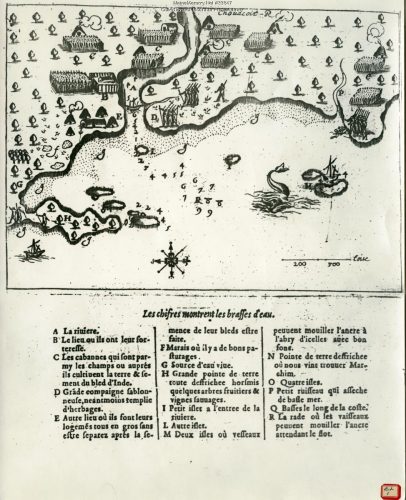
They anchored for a while in Saco Bay and then entered the Saco River. Here Champlain describes:  “a large number of Indians came towards us upon the bank of the river and began to dance. Their chief, whose name was Honemechin, was not then with them; but he arrived about two or three hours later with two canoes, and went circling round and round our pinnace … These people showed that they were much pleased … The Sieur de Monts had certain articles given to their chief, with which he was much pleased, and he came on board several times to visit us.” (Biggar, 1922: 325-327)

The following day the Sieur de Monts and Champlain went on shore and were astonished to find a series of great agricultural fields that ran along the bank of the river. As Champlain tells it: “ We saw their grain, which is Indian corn. This they grow in gardens, sowing three or four grains in one spot, after which, with the shells of the aforesaid sign, they heap about it a quantity of earth …Amongst this com, they plant in each hillock three or four Brazilian beans [Phaseolus vulgaris], which come up in different colors. When fully grown these plants twine around the aforementioned corn, which grows to a height of five to six feet; and they keep the ground very free from weeds. We saw there many squashes, pumpkins, and tobacco, which they likewise cultivate! They plant their corn in May and harvest it in September.” (Biggar,  1922: 327)

The Sieur de Monts and Champlain then headed further south to Cape Ann, leaving Saco Bay extremely impressed with the coast and the people of Maine.  In southern New England, they would observe another great agricultural people, the Nauset,  who would be much more aggressive towards them and essentially would chase them away.

On June 25, they left Nauset harbor and traveled north-east, until they were well clear of the coast, and then swung to the north back to Saco Bay where he met with Marchin, the chief they had hoped to see previously at Kennebec. Biggans (1922: 263) places their meeting site at present-day Prouts Neck in Scarborough, Maine, and their anchorage between Bluff and Stratten Islands. The Sieur de Monts gave Marchin many presents, which pleased him, and in return, he gave them a young Etchemin boy whom he had captured in war.

They then sailed northeast back to Kennebec, where they arrived on June 29.  Here they hoped to meet Sasinou whom they had missed before, but once again he did not show. They did, however, meet another chief named Anassou, whom they bartered with and became friends. The de Monts party then headed back to St. Croix Island, moving briskly along the remaining coast of Maine.

Figure: Champlain’s 1607 map of Saco Bay

Literature cited

Bigger, H. P. (1922) The works of Samuel de Champlain. Vol 1. The Champlain Society, Toronto.

Early Contact Period (5): George Waymouth abducts five Etchemin

In 1605, Captain George Waymouth embarked on a mission that would have far-reaching consequences. Sent from England to explore the coast of Maine by the Earl of Southampton, this expedition was part of an English Catholic attempt to scout out potential sites in New England for a colony. However, the secondary goal, to kidnap a few Indigenous people for information, would leave a lasting mark on the region and its inhabitants.  

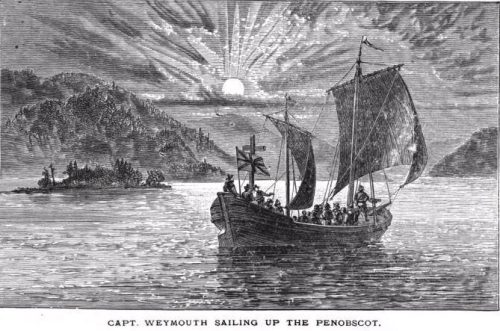
Waymouth and crew sailed from England on March 31 on the ship Archangel and landed first near Mohegan Island off the coast of Maine on May 17. After exploring the island’s bounteous resources for two days, Waymouth then sailed northward, among the St. Georges Islands, and anchored in Penobscot Bay at the mouth of the St. Georges River. “Here the master and men regaled themselves several days and recruited their strength … he and a party properly armed, explored the islands and shores, while his sailors, engaged in fishery, readily took plenty of salmon and other fishes of great bigness” (Williamson, 1839: 192).

Eleven days after the Archangel moored, the crew first encountered the local Etchemin people.  On May 30, 1605, the voyages chronicler Rosier relates: “This day, about four in the afternoon, we in the ship spied three canoes coming towards us, which went to the land adjoining, where they went ashore, and very quickly made a fire, about which they stood beholding our ship: to whom we made signs with our hands and hats, waffling onto them to come onto vs, because we had not seen any of the people yet. They sent one Canoa with three men, one of which, when they came near us, spoke in his language very loud and very boldly, seeming as though he would know why we were there and, by pointing with his oars towards the sea, we conjectured he meant we should be gone. But when we showed them knives and their use, by cutting of sticks and other trifles, as combs and glasses, they came close aboard our ship, as desirous to entertain our friends. To these, we gave such things as we perceived they liked when we showed them the use: bracelets, rings, peacock feathers, which they stuck in their hair, and tobacco pipes (Burrage, 1906, pp. 367-368).”

Over the next several days they had many encounters with the Etchemin and encouraged their trust through trade. Rosier relates: “Our Captain had two of them at supper with us in his cabin to see their demeanor, who behaved themselves very civilly, neither laughing nor talking all the time, and at supper fed not like men of rude education, neither would they eat or drink more than seemed to content nature; they desired peas to carry a shore to their women, which we gave them, with fish and bread, and lent them pewter dishes, which they carefully brought again (Burrage, 1906, p. 402)”.

At this point, Waymouth decided the time was ripe to kidnap some of the locals. Rosier justified this move by saying: “We began to join them in the rank of other Salvages, who travelers in most discoveries have found very treacherous. They never attempted mischief until, by some remissness, fit opportunity afforded them certain ability to execute the same. Therefore, after good advice, we determined so soon as we could to take some of them, least (being suspicious we had discovered their plots) they should absent themselves from us (Burrage, 1906, p. 407).”

On the next day, they abducted five Etchemin, three by duplicity and two by force. According to Rosier: “About eight a clock this day we went on shore with our boats to fetch aboard water and wood, our Captain leaving word with the gunner in the ship, by discharging a musket, to give notice if they spied any canoes coming …. there were two canoes, and in each of them were three savages; of which two came aboard, while the others stayed in their canoes about the ship; and because we could not entice them aboard, we gave them a can of peas and bread, which they carried to the shore to eat. But one of them brought back our can presently and stayed aboard with the other two, for he being young, of a ready capacity. One we most desired to bring with us into England had received exceeding kind usage at our hands and was therefore much delighted in our company (Burrage, 1906: 378).”

These three were prevented from leaving the ship, presumably by putting them in the hold.

To capture the other two that had left, Rosier tells us: “We manned the light horseman with 7 or 8 men, one standing before carried our box of merchandise a platter of peas, but before we were landed, one of them (being too suspiciously fearful of his own good) withdrew himself unto the wood. The other two met us on the shore side, to receive the peas, with whom we went up the cliff to their fire and sat down with them … showed them trifles to exchange … but suddenly laid hands upon them. And it was as much as five or six of us could do to get them into the light horseman. For they were strong and so naked as our best hold was by their long hair on their heads, and we would have been very loath to have done them any hurt … being a matter of great importance for the full accompaniment of our voyage (Burrage, 1906, p. 378-379).”

Waymouth then headed back to England with his human cargo below deck.

Illustration: Captain George Waymouth sails into Penobscot Bay in Maine. Image from Thomas Wentworth

Bibliography:

Burrage, H.S. (Ed.) (1906). Early English and French voyages chiefly from Hakluyt 1534-1608. Charles Scribner’s Sons.

Williamson, W. D. (1889) A History of the State of Maine: from its first discovery, A.D. 1602, to the separation, A.D. 1820. Hallowell: Glazier, Masters & Co.

Early Contact Period (7): Christopher Levett’s Voyage up the Coast (1623 – 1624)

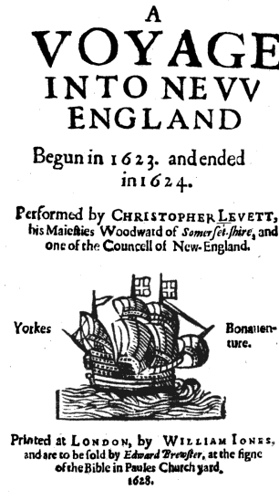
The first European to settle on the shore of Casco Bay was Christopher Levett, a merchant and friend of Sir Ferdinando Gorges. He left a detailed account of his adventure, “A Voyage into New England,” published in 1626 and reprinted by James Phinney Baxter in 1893.

Levett set sail for New England in 1623, reached the Isles of Shoals in the autumn, and then, after a visit to Piscataway, proceeded up the coast in two open boats with ten others to find a location for his colony.  Levett first examined the area around today’s Portsmouth, or Aquamenticus, as he called it. Here, he found a good harbor and much land that was “already cleared, fit for planting corn and other fruits, having heretofore been planted by the savages, who are all dead. There is [also] good timber and likely to be good fishing, but as yet there hath beene no tryall made that I can heare of.  (Baxter, 1893, p. 92).

He then proceeded to Cape Porpoise, and then ‘Sawco” (Saco), four leagues farther east. On the way, he had to battle a heavy fog; the boats became separated, and such a fierce storm assailed them that they were forced to strike sail and take to their oars, spending the night at seaFinally united on land, the group spent five nights at Saco, huddled in a wigwam made of their boat sails, in weather “very unseasonable, having much raine and snow, and continuall foggse “… The greatest comfort they had, “next unto that which was spiritual, was this we had foule enough for killing, wood enough for felling, and good fresh water enough for drinking.” (Baxter, 1893, p. 95)

Making his way farther up the coast, Levett came to a place he called “Quack”, which he named York, after his hometown in England. Quack, he describes, as ” a bay or sound betwixt the main and certain islands which lyeth in the sea about one English mile and a half”. This would be Portland Harbor, the western part of Casco Bay.  Continuing, Levett adds:  ”There are four islands [Cushing’s, Peaks’, Diamond and House] which make one good harbor; there is very good fishing, much fowl and the main as good ground as any can desire”. (Baxter, 1893, p. 99)

While exploring the region, he met: “the Sagamore or King of who hath a house, where I was one day when there were two Sagamors more, their wives and children, in all about 50. and we were but 7. They bid me welcome and gaue me such victualls as they had, and I gaue them Tobacco and Aqua vitae … And the great Sagamore of the East country, whom the rest doe acknowledge to be chiefe amongst them, hee gave unto me a Bevers skin, which I thankfully received, and so in great loue we parted.”

Continuing his exploration eastward, Levett mentions Casco having “a good harbor, good fishing, good ground and good fowl, and a site for one of the twenty good towns well- seated to take the benefit both of the sea and fresh rivers”. He also suggests that the whole distance from Cape Elizabeth to the Sagadahoc, was exceedingly favorable for plantations. (Baxter, 1893, 100 – 101).

The next place Levett came to was Capemanwagan [Southport or perhaps Boothbay]. Here he lingered and met many important Wabanaki sagamores with their wives and children and was able to make a significant fur trade: “there I staid foure nights, in which time, there came many Savages with their wives and children, and some of good accompt amongst them, as Menawormet a Sagamore, Cogawesco the Sagamore of Casco and Quack, now called Yorke, Somerset, a Sagamore, one that hath ben found very faithfull to the English, and hath saved the lives of many of our Nation, some from starving, others from· killing. … hearing of my being there, they desired to see me, which I understood by one of the Masters of the, Ships, who likewise told me that they had some store of Beauer coats and skinnes, and was going to Pemaquid to truck … I then sent for the Sagamores, who came, and after some complements they told me I must be their cozen … whereupon I told them that I understood they had some coates and Beauers skins … Somerset swore that there should be none carryed out of the harbour, but his cozen Levett should haue all …”

When the Sagamores were ready to leave, they asked Levett where he was going to settle.  He told them that he “intended to goe farther to the east before I could resolue … Cogawesco, the Sagamore of Casco and Quacke, told me if that I would sit downe at either of those two places, I should be very welcome, and that he and his wife would goe along with me in my boate to see them, which curtesey I had no reason to refuse, because, I had set up my resolution before to settle my plantation at Quacke, which I named Yorke, and was glad of this oppertunity

Levett built a fortified home there in the summer of 1624 and then took passage for England on a fishing boat to garner support for his colony. He left ten men behind, intending to return the following year, but never made it back. Nothing is known about the fate of these men.  

Illustration: Frontispiece of Christopher Levett’s A Voyage into New-England, Begun in 1623, and Ended in 1624.

Bibliography:

Baxter, J. P. (1893) Christopher Levett of York: The pioneer colonist in Casco Bay. Gorges Society: Portland

The Early Contact Period (8): Notable Wabanaki

Amenquin – Western Etchemin, Sagamore (Penobscot). Visited the Popham colony for a day and a half in 1607 with Tahánedo and Skidwares.  They were feasted and attended a religious service. Given copper beads and knives. 

Amooret – Western Etchemin (Penobscot). Captured by George Waymouth in 1605 and taken back to England. May have been sent with Tahánedo on an expedition of  Hanham and Pring to Maine in 1606.  

Anassou – Western Etchemin, Sagamore (Kennebec). Bartered with Samuel Champlain in 1605 at a location not specified. Told him about Waymouth’s abductions.

Assacomet – Western Etchemin (Penobscot). Captured by Waymouth and taken back to England. Sent on a mission to Cape Breton with Captain Henry Challons in 1606, and was captured on a detour to the West Indies. Eventually, he was ransomed, moved back to England, and stayed at Ferdinando Gorges’s estate. In 1614, is sent to New England as a guide for Captain Nicholas Hobson to explore Martha’s Vineyard and search for gold.

Asticou – Western Etchemin, Sagamore (Penobscot). Visited by Father Baird on Mt. Desert Island in 1611. He is very sick but recovers after the Jesuits’ visit. Replaces Bashaba as Grand Chief of Mawooshen in 1615, when he is killed.  

Bashaba – Western Etchemin, (Penobscot). Grand Chief of Mawooshan Confederacy, which covered a 120-mile stretch of Maine from the Narraguagus River in the northeast to the Mousam River (at Kennebunk). Met Champlain in 1604, Jean de Biencourt de Poutrincourt and Father Baird in 1611, and  John Smith in 1614.. Killed in a Tarrentine raid in 1615.

Cabbison  – Western Etchemin, Sagamore (Penobscot). Met de Mont and Champlain near Bangor in 1604, along with Bashaba.

Cogawesco – Armouchiquois,Sagamore (Aucocisco). Met Christopher Levett in 1623 at Casco.

Honemechin – Armouchiquois, Sagamore (Saco). Met de Monts and Champlain in 1604 near Saco.

Iouaniscou  – Sagamore (Souriquois). Murdered some Armouchiquois near Mt. Desert Island and carried off some women as prisoners. The women are later put to death.

Manido – Western Etchemin (Penobscot). Captured by Waymouth and taken back to England. Sent in 1606 on a mission with Captain Henry Challons to Cape Breton. The Spanish captured him in a detour to the West Indies, and he died there.

Manthoumermer  – Western Etchemin, Sagamore (Kennebec). Met Sier de Monts and Champlain at Wiscasset in 1605. They gave him biscuits and peas.

Marchin – Western Etchemin, Sagamore (Kennebec). Met Champlain at Prout’s Neck in 1606 and gave him a captive Etchemin. He met Champlain again the following year at the village of Chouacoet on the Saco River. In 1607, is killed in a raid on that village by Membertou and Messamouet.

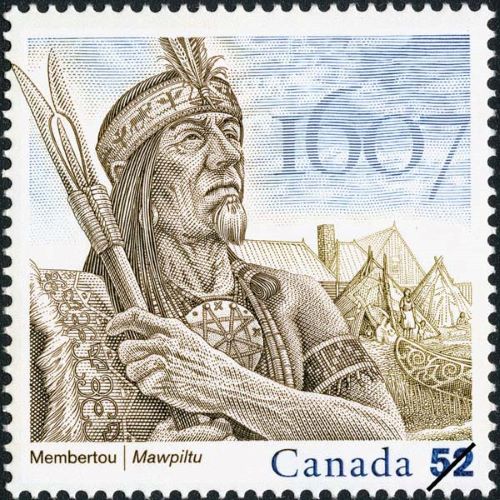
Membertou – Paramount Chief of Souriquois (Port Royal, Nova Scotia), and a great friend to early French visitors. Claimed he met Jacques Cartier. Taken to France in the 1570s and hosted by the mayor of Bayonne. Father-in-law of Panonias, who was murdered in 1607 in the Terrantine War. In revenge, he leads an attack on the Saco village of Chouacoet, killing 20 of their people, including two of their leaders, Onmechin and Marchin. In 1610, he entered a formal alliance with the French and was the first Indigenous leader to be baptized as a Catholic.  Died of dysentery in 1610, supposedly over one hundred years old.

Menawormet – Western Etchemin, Sagamore (Aucocisco). Met Christopher Levett in 1623 at Casco.

Messamouet – Eastern Etchemin (La Have, Nova Scotia). Befriended the French colonists in 1605; traveled with them to Saco, presented gifts to Onemechin of copper beads and knives, and was unhappy with the corn, beans, and squash he received in return. Made a long, angry oration. In 1607, he raided  Onemechin’s village of Chouacoet with Quagimout. Onmechin and local leader Marchin were killed during the raid.

Meteourmite – Western Etchemin Sagamore (Kennebec). Ambushed and killed eleven Popham colonists in 1607 in retaliation for the shooting of several Wabanaki who had come to Fort St. George for trade. In 1611, has a peaceful meeting with the Frenchmen  Pounticourt and Baird. 

Opparunwit – Armouchiquois, Sagamore (Aucocisco). Met Christopher Levett in 1623 at Casco.

Onemechin – Armouchiquois, Sagamore (Saco). Champlain’s group visited him in 1606, and he gave them an Etchemin prisoner. Messamount made him a gift of copper beads and knives, and he was unhappy with the corn, beans, and squash he received in return. He was killed in a later raid on his village by Membertou.

Ouagimout – Eastern Etchemin (St.Croix). Met Champlain, Marc Lescarbot, and Father Baird. Captured by Captain Argall in 1611, he showed him the way to Port Royal and the French settlement. Delivered Ouagimout’s body to Bashaba after he was killed in the Tarrentine War. Participated in Membertou’s raid of Chouacoet in 1607.

Panonias – Souriquois. Guided Champlain down the coast of Maine in 1605. Killed by  Armouchiquois in revenge for the murders of Iouaniscot.

Passaconaway  – Pennacook sagamore (Merrimac). Met with Christopher Levett in 1623 at Casco.

Sadamoyt – Western Etchemin Sagamore (Penobscot).  Met Christopher Levett in 1623 at Casco.

Sasinou – Western Etchemin sagamore (Kennebec). Described to Champlain by Manthoumerer in 1605.

Sebenoa – Western Etchemin sagamore (Penobscot). Met Captain Gilbert of the Popham colony in 1607 and showed him his village.

Secodont – Souriquois Sagamore  (Ouigoudi at mouth of St. John River). Befriended the Sieur de Mont’s group at Port Royal in 1605; Rescued Champdoré and Champlain in a shipwreck; traveled to Saco with them as a guide. Participated in Memberton’s raid of Chouacoet in 1608.

Skitterygusset – Armouchiquois Sagamore (Aucocisco). Met Christopher Levett in 1623 at Casco. Accused of murdering trader Walter Bagnall in 1631. Sold 200 acres on the northern side of Capisic Brook in Scarborough to Francis Small in 1657.

Skidwarres – Western Etchemin (Penobscot). Captured by Waymouth and taken back to England. Sent to Maine in 1607 as a scout and pilot and allowed to stay.   Interacted with Popham colonists on several occassions.

Tahánedo – Western Etchemin sagamore (Penobscot). Brother of Bashabes. Captured by Waymouth in 1605 and taken back to England. Sent out as a pilot and scout on a mission to Maine in 1606, led by Captain Thomas Hanham and Martin Pring.  At the end of the voyage,  he is allowed to rejoin his Etchemin band. Later in 1606, he interacted with Popham colonists and their guide, Skidwares, who was also an abductee of Waymouth. Served as  John Smith’s guide and interpreter in his trip down the Maine coast in 1614.

Tisquantum (Squanto) – Wampanoag (Patuxet). Abducted by Thomas Hunt in 1614 and sold as a slave in Spain. Rescued by monks and eventually finds his way to England and then Newfoundland.  Joined Thomas Dermer there in 1619 as a guide and traveled along the coast of Maine and New England with him. Tisquantum (as Squanto) later plays a central role as an interpreter and guide when the Mayflower landed in Cape Cod Bay in 1620.

Illustration: Canadian stamp honoring Membertou

Early Contact Period (6): Fate of the Etchemin Abducted by Waymouth

Early Contact Period: Fate of the Etchemin Abducted by Waymouth

it turned out that the captives Waymouth had abducted were much more important than he had initially realized. One named  Tahánedo was a sagamore of the region and a close relative of Bashabes, the paramount chief of the whole Etchemin-Abenaki Federation. Bashabes tried frantically to get the captives back, sending canoes filled with fur and tobacco for trade, but as Waymouth’s chronicler Rozier related, “this we perceived to be only a mere device to get possession of our men to ransom all those which he had taken” (Burrage, 1906).  

As Waymouth’s ship headed out to sea,  the Etchemin on shore assumed their compatriots had been killed. In fact, not long after Waymouth left,  Samuel de Champlain, on one of his coastal Maine voyages, met an indigenous trader on Mohegan Island who told him about the assumed murders.

On board, Rosier was charged with restoring good relations with the captive five and pumping them for information about New England. The abductees proved to be cooperative, and as Rosier stated, “Although at the time when we surprised them, they made their best resistance, not knowing our purpose, nor what we were, nor how we meant to use them; yet after perceiving by their kind usage we intended them no harm, they have never since seemed discontented with us,” and he called them “very tractable, loving, and willing by their best means to satisfy us in anything we demanded of them, by words or signs for their understanding … We have brought them to understand some English, and we understand much of their language; so as we can ask them many things” (Burrage, 1906).

The abductees were taken to southwest England and delivered to the Fort of Plymouth and Sir Ferdinando Gorges, the commander of this coastal stronghold. Gorges kept three of the Etchemins,  Assacomet, Manido, and Skidwarres, at his manor in Devonshire, and the other two, Amooret and Tahánedo, he delivered to  Sir John Popham, then England’s Lord Chief Justice, who owned several manorial estates in Devonshire and Somerset counties.

The Etchemin from the wilds of Maine likely felt much more at ease at these rural estates than they would have in crowded cities filled with lethal diseases. “Although they were involuntary guests, they could have been given some freedom to hunt, fish, and gather, all to create long-term relationships” (Prins and McBride, 2012). 

Popham and Gorges had become interested in colonizing New England and were keen to obtain information from the “Mawooshen Five.” In his engaging article Alien Abductions, James Ring Adams (2015) wrote that Gorges left a record that he greatly enjoyed the company of his house guests. He praised them “for great civility far from the rudeness of our common people” and talked with them at length about their homeland. “And the longer I conversed with them, the better hope they gave me of those parts where they did inhabit, was proper for our uses.” Gorges would learn about the important rivers that ran into the land, the flora and fauna, the key leaders, and the major alliances.

Eventually, all the Mawooshen Five would be sent on missions back to Maine by Gorges, Popham, and the Plymouth Company. In August 1606, their first ship, Richard, set sail under the command of Captain Henry Challons with Assacomet and Manido on board. Their instructions were to make for Cape Breton and then head southwest; instead, Challons detoured to the West Indies, where all were taken prisoner by a Spanish fleet somewhere off the coast of Puerto Rico. Challons would not get free until late 1608. Manido probably died while in Spanish hands. Assacomet was eventually ransomed and moved back in with Gorges in Plymouth.  In 1614, he would return to New England when Gorges put him on a boat commanded by Nicholas Hobson that explored Martha’s Vineyard in search of gold. Traveling with them was another abductee, Epenow. who would escape. The fate of Assacomet is unrecorded.

A second ship sent out in 1606, under Captain Thomas Hanham and Martin Pring, with Tahánedo and possibly  Amooret aboard, successfully arrived on the coast of Maine and explored the rivers and harbors of the Gulf, including the lower Kennebec. At the end of the voyage,  Tahánedo was allowed to rejoin his Etchemin band as a reward for his services and would resume his role as a sagamore.

Skidwarres was sent to Maine in 1607 as part of another Popham mission to build a settlement. The colonists arrived safely and settled at Sagadahoc on the Kennebec River for the winter. This proved hard, however, and they went home the following spring. They left Skidwarres behind, who had reunited with  Tahánedo and his people.  

Illustration: Sr. John Popham knight Lorde Cheife Justice of England & of her Maj. most honorable Privie Counsell. Sir John Popham (1531–1607), Lord Chief Justice. Copy by George Perfect (1781–1853) of lost original by an unknown artist. National Portrait Gallery, London.

Bibliography:

Adams, J. R. (2015). Alien abductions: How the Abenaki discovered England. Smithsonian 16(3),  1–8. https://www.americanindianmagazine.org/story/alien-abductions-how-abenaki-discovered-england

Burrage, H.S. (Ed.) (1906). Early English and French voyages chiefly from Hakluyt 1534-1608. Charles Scribner’s Sons.

Prins, H. E. L., & McBride, B. (2007). Asticou’s Island Domain: Wabanaki Peoples at Mount Desert Island 1500-2000. Acadia National Park. Ethnography Program. National Park Service. 

Early Contact Period (4): Champlain’s third voyage down coast of Maine

On 29 August 1606, Champlain left Port Royal on his third voyage down the coast of New England.  He stopped briefly at St. Croix where he picked up the Mi’kmaq chieftains  Secoudon and Messamouet, who wanted to travel with him to Saco to ally with the people there.

The group left St. Croix on September 12, paused for a while in Casco Bay, and arrived at Saco on the 21st.  As Champlain relates: “On the 21st we reached Saco, where we saw Onemechin, chief of that river, and Marchin, who had finished harvesting their corn … In this place, we  rescued a prisoner from Onemechin, to whom Messamouet made presents of kettles, axes, knives, and other articles.  Onemechin made return in Indian corn, squashes, and Brazilian beans; but these did not altogether satisfy Messamouet, who departed much displeased because he had not been suitably repaid for what he had given them” (Biggar, 1922: 396). He would return the next year and conduct a brutal raid.

The group then proceeded to Cape Ann and then onto Gloucester Harbor, where they had a friendly interaction with a large group of locals. They then sailed to Cape Cod and Mallebarre.  Here, their interactions with the Nauset began well, but after a couple of weeks Champlain “observed that the Indians were taking down their wigwams and were sending into the woods their wives, children and provisions … This made us suspect some evil design  … ” (Biggar, 1922: 416)

Sure enough, a few days later, a small party of Frenchmen on the shore were attacked.“The Indians, to the number of four hundred, came quietly over a little hill, and shot such a salvo of arrows at them as to give them no chance of recovery before they were struck dead. Fleeing as fast as they could towards our pinnace, and crying out, “Help, help, they are killing us,” some of them fell dead in the water, while the rest were all pierced with arrows, of whom one died a short time afterward. These Indians made a desperate row, with war-whoops which it was terrible to hear” (Biggar, 1922: 421). 

The French attempted a counteroffensive, but the Nauset fled inland, and all that could be done was bury the dead bodies and raise a cross. Soon, as French historian Lescarbot writes, “the Nauset returned to the place of their murderous deed, uprooted the Cross, dug up one of the dead, took off his shirt, and put it on, holding up the spoils which they had carried off; and with all this they also turned their backs to the long-boat and made mock at us by taking sand in their two hands and casting it between their buttocks, yelping the while like wolves (Biggar, 1922: 423)

On October 16, Champlain decided to set sail, but his group didn’t get very far due to contrary winds before returning to Mallebarre Harbor. Forced to stay put, they decided that it was time to extract revenge. As Champlain relates, they would “seize a few Indians of this place, to take them to our settlement and make them grind corn at a hand mill as a punishment for the murderous assault committed upon five or six of our men … [But to do this they would have] to resort to stratagem … when they should come to make friends with us again, we should coax them, by showing them beads and other trifles, and should reassure them repeatedly; then we should take the shallop well-armed, and the stoutest and strongest men we had, each with a chain of beads and a match and should set these men on shore, where … we were to coax them with soft words to draw them into the shallop; and, should they be unwilling to enter, each of our men as he approached was to choose his man, and throwing the beads about his neck should at the same moment put a cord around the man to drag him on board by force …” (Bigger 1922: 478 – 479).

Champlain then states that “This was very well carried out, as arranged,” but gives no details. We can only assume that things actually did not go well, as later in his account he speaks of four or five sick and wounded compatriots and there is never a mention of any captives. Lescarbot reported that “over haste frustrated the design to capture the Indians, though six or seven of them were hacked and hewed in pieces” (Bigger, 1922: 478).

Finally, on October 28, 1606, Champlain decided it was time to return to Port Royal. Their trip back would not be easy, as they suffered several misfortunes at sea. Most notably, the rudder of their ship would be damaged when their shallop surged at the end of its tow line and smashed into the rudder. They only made it back because their pilot Champdore managed a miraculous repair at sea.   

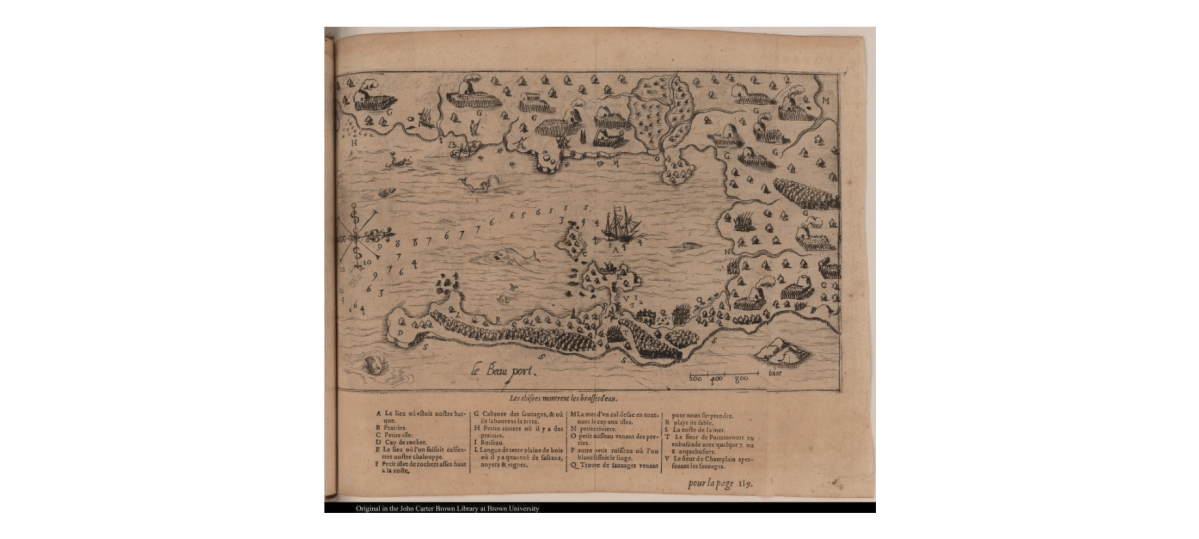
Illustration:  Champlain’s (1613) chart of the harbor of Beauport, present-day Gloucester, Massachusetts.

Literature cited:

Bigger, 1922. The works of Samuel de Champlain. Vol. 1: 1599 – 1607. The Champlain Society, Toronto.

Early Contact Period (1): The first French settlement in Maine

In 1603, King Henry of France granted Pierre Degua (c. 1558–1628, a monopoly on the fur trade in the New World and asked him to colonize l’Acadie, covering eastern Canada and the northeastern United States.  The goal was to set up a settlement, from which furs could be obtained from the Indigenous peoples of New England. 

Degua put together an expedition force of hundred and twenty men and two vessels, one captained by Sieur de Pont Grave, and another, which he captained himself. On board were also French noble Jean de Biencourt de Poutrincourt et de Saint-Justand Samuel de Champlain as the cartographer and historian. It would be Champlain’s first visit to New France.

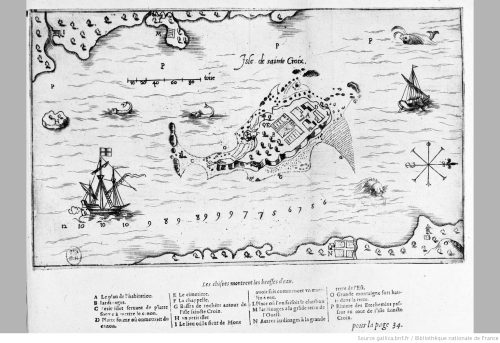
The expedition set sail from Le Havre in April 1603 and arrived at the coast of Nova Scotia in May, in a very rapid crossing. The Sieur de Mons and Champagne then made a careful examination of the coast of Acadia for potential settlement sites. After exploring for a bit, they decided to build their settlement on a small island (now Muttoneguis Island)  in the St. Croix River, which divides what is now Maine and New Brunswick. It caught their eye as a handsome island that would be easy to fortify. Champlain wrote: “This place we considered the best we had seen, both on account of its situation, the fine country, and for the intercourse we were expecting with the Indians of these coasts and the interior, since we should be in their midst…” (Grant, 1907: 40)

On the development of their fort, Champlain continues: “Each worked so efficiently that in a very short time it was put in a state of defense, though the mosquitoes (which are little flies) gave us great annoyance while at work, and several of our men had their faces so swollen by their bites that they could scarcely see … all set to work to clear the island, to fetch wood, to cut timber, to carry earth, and other things necessary for the construction of the buildings” (Grant, 1907: 42).

By the end of September, snow began to fall and the settlers’ preparations for winter were cut short. The river became impassable with treacherous ice flows, and they could no longer cross to the mainland. This left them with a shortage of drinking water and firewood. As the winter progressed. the men began to fall prey to scurvy. Champlain’s descriptions of this disease are quite graphic: “There was engendered in the mouths of those who had it large pieces of superfluous fungus flesh (which caused a great putrification), and this increased to such a degree that they could scarcely take anything except in very liquid form. Their teeth barely held in their places and could be drawn out with the fingers without causing pain.” (Grant, 1907: 53)

Spring came at last in May, and to the settler’s great relief and joy, relief arrived on June 15, 1605 in a ship loaded with supplies. Of the 79 men who wintered at St. Croix, 35 died, and 20 more were severely debilitated when spring came. The selection of St. Croix Island for a settlement turned out to be a great mistake, as it was too exposed to the extreme winter weather. Champlain wrote: “It was difficult to know this country without having wintered there; for on arriving in summer everything is very pleasant on account of the woods, the beautiful landscapes, and the fine fishing for the many kinds of fish we found there …There are six months of winter in that country.” (Grant, 1907: 55)

Bibliography

Grant,  W. L. (ed.) (1907) Voyages of Samuel de Champlain 1604 – 1618. Charles Scribner’s Sons, New York.

McManamon F.P. (2022) The French along the Northeast Coast—1604-1607, Saint Croix Island International Historic Site. National Park Service, Boston, MA.

Otis, C. P. (1880) Voyages of Samuel de Champlain: Translated from the French. Prince Society, Boston

Early Contact Period (2): Champlain’s first explorations of coastal Maine

While the artisans were busy building the settlement at St. Croix, Pierre Dugua sent Champlain with 12 sailors and 2 local guides on the first voyage along the coast of what is now Maine.  They set out on September 2, 1604, and within a few days sighted Mount Desert Island, which Champlain named for the stone mountain peaks, that were bare of trees. Champlain described Mt. Desert Island as: “about four or five leagues in length, of which we were almost lost on a little rock, level with the surface of the water, which made a hole in our pinnace close to the keel. The distance from this island to the mainland on the north is not a hundred paces. It is very high and cleft in places, giving it the appearance of the sea of seven or eight mountains one alongside the other. The tops of them are bare of trees because there is nothing there but rocks. The woods consist only of pines, firs, and birches. I named it Mount Desert Island ” (Grant, 1907 – pg. 45).

Champlain also wrote about interactions with the Indigenous people along the shorelines. They came across two local Etechemin rowing a canoe and, after some initial discourse and an exchange of trade items for fish, they led them further south to the mouth of the Penobscot River and up the river about 20 miles to the fall line at present-day Bangor, Maine.

Champlain reported that along the riverbank were: “…neither town nor village, nor any traces that there ever had been any, but only one or two empty Indian wigwams…” He was told by his guides that ”they come there [to the river] and to the islands only for a few months in summer during the fishing and hunting season when the game is plentiful. They are a people of no fixed abode, from what I have discovered and learned from themselves; for they pass the winter sometimes in one place and sometimes in another, wheresoever they perceive the hunting of wild animals is the best” (Grant, 1907 – pg. 48). The Etechemin’s and other Eastern Wabanakis groups followed a migratory foraging subsistence way of life (Prins and McBride 2007:1-3). 

Near Bangor, Champaign and his party met on shore with another group of Etchemins and two of their leaders, Bessabez and Cabhis. Each was accompanied by at least 30 followers. As Champagne describes the encounter: “I ordered the crew of our pinnace to draw near the Indians and to hold their weapons in readiness to do their duty in case they perceived any movement of these people against us. Bessabez, seeing us on shore, bade us sit down, and began with his companions to smoke, as they usually do before beginning their speeches. They made a present of venison and waterfowl “(Grant, 1907 – pg. 49).

The meeting went smoothly and strong interests were expressed for cooperation and alliance.  Champlain conveyed: “that the Sieur de Monts had sent me to them, and also their country; that he wished to remain friends with them, and reconcile them with their enemies, the Souriquois and Canadians; moreover, that he desired to settle in their country and show them how to cultivate it, in order that they might no longer lead so miserable an existence as they were doing; and several other remarks on the same subject…I made them presents of hatchets, rosaries, caps, knives, and other little knick-knacks; then we separated. The rest of this day and the following night they did nothing but dance, sing, and make merry, awaiting the dawn when we bartered a certain number of beaver skins.” (Grant, 1907 – pg. 50)

Thus, the two cultures made their first tentative steps to seek an arrangement that would reward them both. The meeting concluded; Champlain and his men sailed down the river the next day. They explored Penobscot Bay and the mid-coast region a bit more, and then returned to the St. Croix settlement, arriving there on 2 October.